

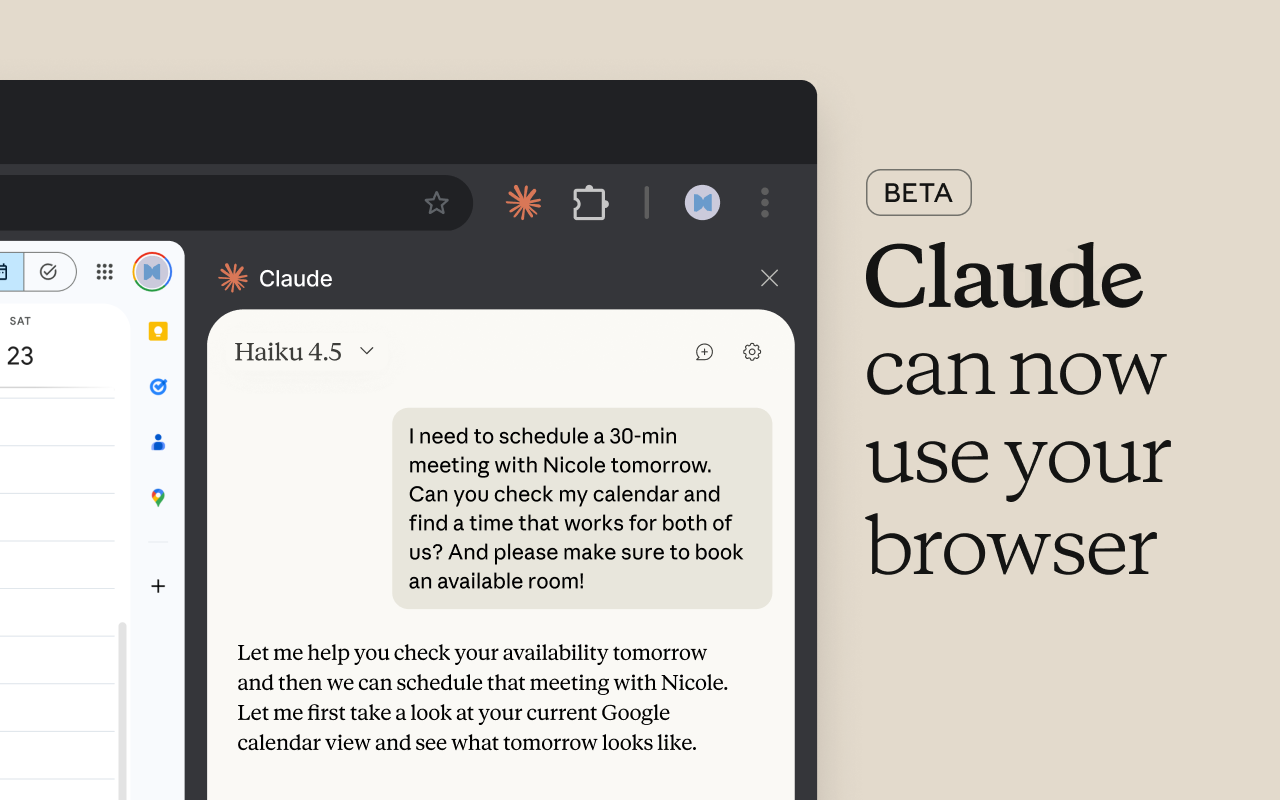

Anthropic has rebuilt its Claude in Chrome browser extension so that sessions started in the side panel are no longer stuck in a single tab. Conversations are now saved to a user’s history, skills and connectors work directly in the browser, and a task started in a tab can be picked up and finished on the Claude desktop, web, and mobile apps.
From an Isolated Tool to a Full Cowork Client
Conversations started in the side panel are now saved to Claude history and can be resumed from the Claude desktop, web, and mobile apps, with skills and connectors already configured for an account working from the browser without additional setup. The side panel now runs the same underlying Claude Cowork session as the desktop, web, and mobile apps, meaning sessions live with a user’s account rather than on any single device.
Previously, side panel sessions were effectively their own separate product. Conversations stayed in the browser, skills and connectors did not follow, and switching to the desktop app meant starting the task over from scratch.
What Claude in Chrome Can Do
Claude in Chrome lets Claude see the page a user is on and take actions in it, including clicking links, typing text, navigating between pages, and filling out forms, using the person’s existing logins. This is particularly useful for tools that don’t connect directly to Claude, such as internal dashboards, legacy systems, and vendor portals.
Anthropic’s example use case involves asking Claude to collect invoice details from several vendor portals, build a spreadsheet, then continue the same session on desktop to add local files or compare the results with a previous budget.
Availability
The update is available on Max and Team plans today, and is rolling out to Pro users over the coming weeks. According to reporting on the rollout, Enterprise works differently: the feature stays off by default there, with admins responsible for switching it on. Claude in Chrome does not yet run on other Chromium-based browsers or on mobile.
Security Considerations
Browser-based AI agents carry inherent risks, and Anthropic has been upfront about them. Anthropic has stated that Claude in Chrome carries the same risks as any AI agent that acts in a browser, chiefly prompt injection, where a malicious actor hides instructions for the agent inside a webpage. A separate check reviews consequential actions when automatic approval is enabled, while Claude still asks before actions such as purchases or sharing personal data, though Anthropic says these safeguards reduce risk but cannot eliminate it entirely.
How to Get Started
Users can enable Claude in Chrome from the Claude desktop app by opening Settings, toggling on the Claude in Chrome connector, and installing the extension. Once enabled, it appears in the Connectors dropdown for conversations, though it must be turned on manually per conversation since it’s disabled by default.